
Key takeaways
- Optimize your Google Business Profile, collect consistent reviews, and showcase completed project photos to build local trust.
- Capture high-intent homeowners with dedicated service pages and tightly targeted Google Ads with negative keywords.
- Establish repeatable referral partnerships with property managers, real estate agents, and complementary trades.
- Track qualified leads and booked jobs rather than clicks, and test one marketing change at a time to measure real profit.
Roofing demand rarely stays even throughout the year. A storm can fill the calendar, while a slow month leaves several roofing companies competing for the same homeowner.
That makes roofing marketing easier to misread. Choose the primary category that best describes your business. Add your service areas and confirm your opening hours. What matters is whether your leads fit your services, location, and job size.
If you’re wondering how to promote a roofing business and get better leads, start with these 11 useful tips:
1. Get your Google Business Profile in shape
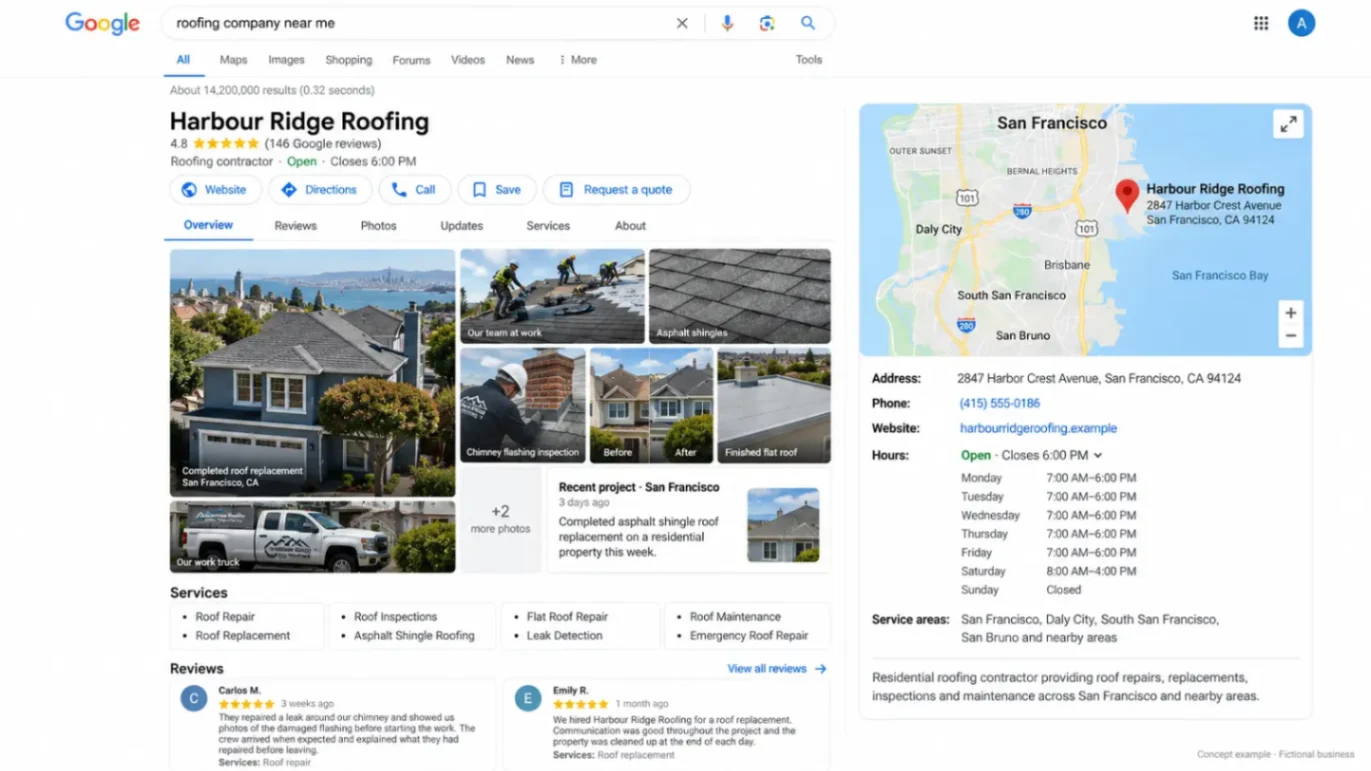
Your Google Business Profile can put your roofing business in front of people searching for local roof repair, roof replacement, and other roofing services.
Complete every relevant section of your profile. Choose the primary category that best describes your business. Add your service areas and confirm your opening hours. Keep your phone number and website current. Google says complete and correct Google Business Profile details can help your local ranking.
Upload photos of recent roofing jobs. Add before-and-after images when the customer has given permission. Add a short description covering the roofing service, material, and general service area. These photos show homeowners the type of roofing work you do.
Keep checking the profile as your business changes. Wrong opening hours, an old phone number, or outdated service areas can lose an inquiry before someone reaches your website.
2. Build a consistent review process
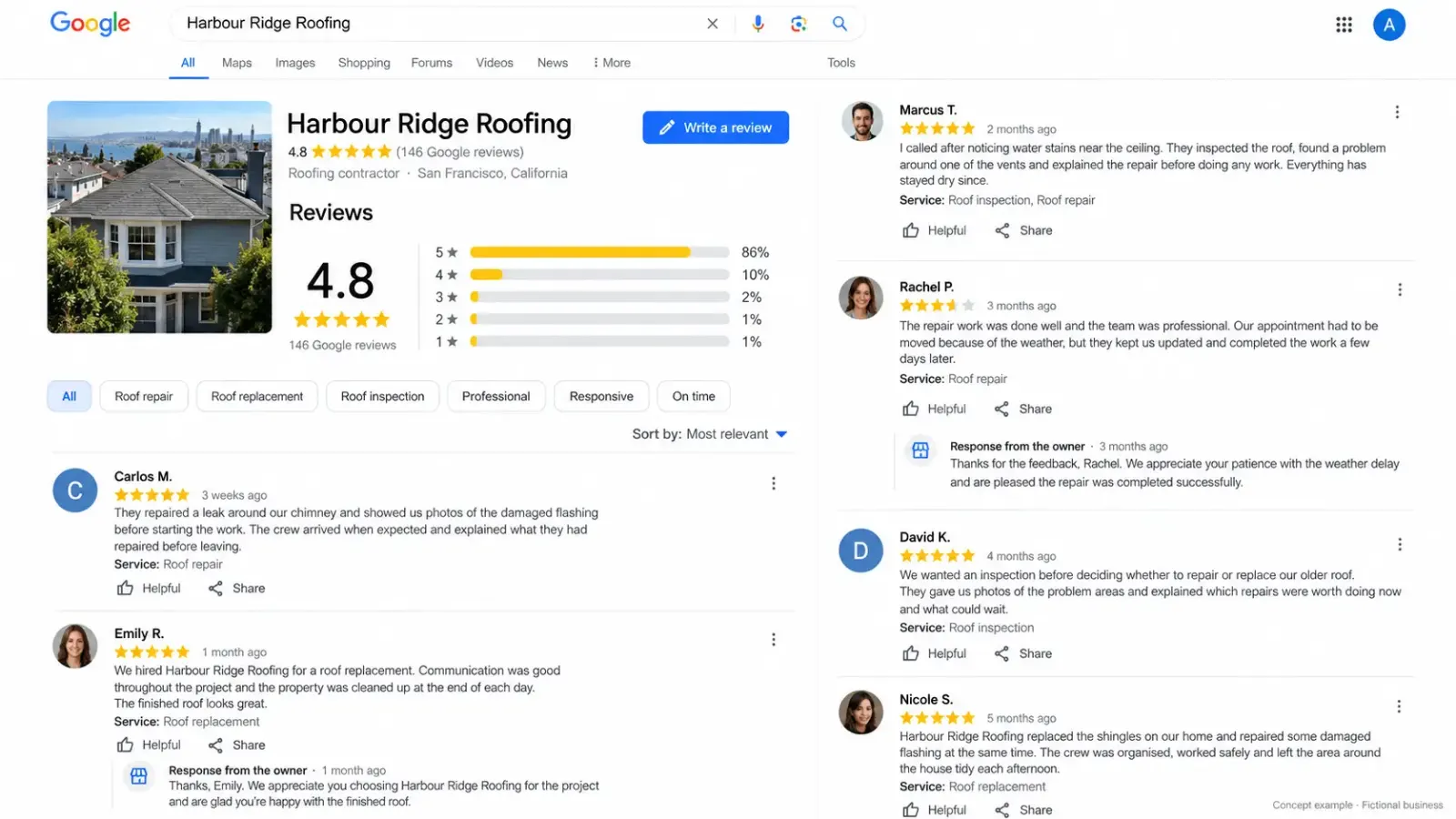
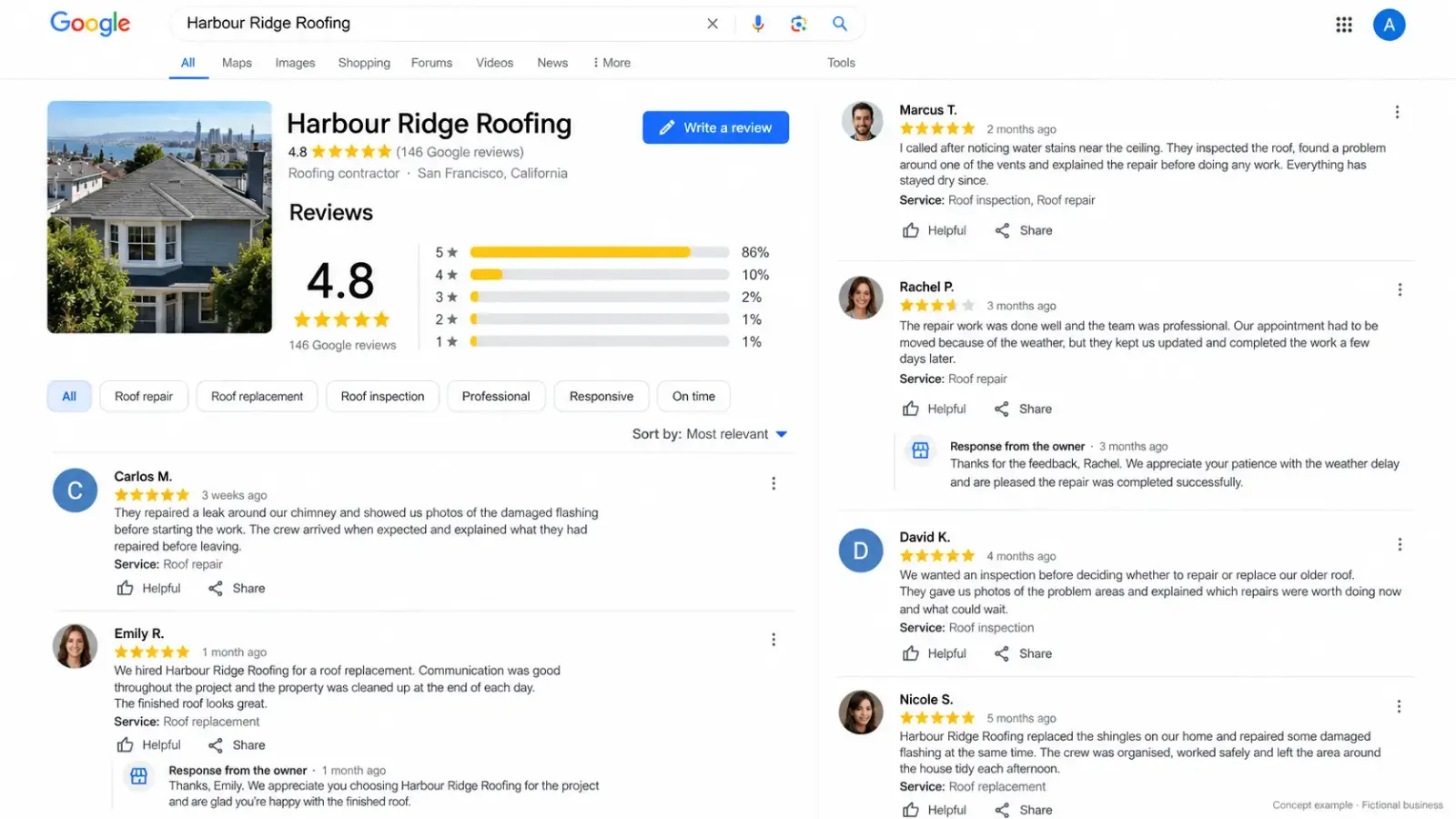
Reviews help homeowners compare roofing contractors and decide whom to call. Google says more reviews and positive ratings may help your local ranking. However, Google also considers other factors.
Ask satisfied customers for a review after you complete their job. Send a direct review link so the process only takes a few minutes. Let them describe their own experience. These reviews are more useful than a short, generic comment. With the customer’s permission, add their testimonial to the service page that matches the work you completed. This gives homeowners evidence from someone who hired you for similar roofing work.
Respond to reviews as well. Thank people for positive feedback. For complaints, thank the customer for sharing their concerns and respond with the facts. Don’t argue or share private details. If the issue needs a longer discussion, invite them to contact you by phone or email.
Make this a regular step after each completed job, but keep the message simple and avoid turning it into a sales pitch.
3. Create pages for the roofing services you want to sell
Creating useful service pages is one of the most important roofing marketing strategies for attracting homeowners through organic search.
Create a separate page for each main type of work. This may include roof repairs, roof replacements, emergency roof repairs, and commercial roofing. Link these pages from one main roofing services page so homeowners can find the help they need.
Explain what problems you handle. Tell them which roofing materials you work with and where you provide the service. Add original project photos where you have permission.
Don't publish dozens of near-identical pages that contain the same copy with a different town name. Give people information that relates to the service and area instead.
These pages can help homeowners find you through Google. They also explain whether you handle the roofing work they need.
4. Use Google Ads for high-intent searches
Google Ads can put your business in front of homeowners already searching for roofing services. Searches such as roof repair and roof replacement can show strong buying intent, although the exact intent varies by search. Google Ads may suit businesses that want roofing leads sooner or want to promote a service in one area.
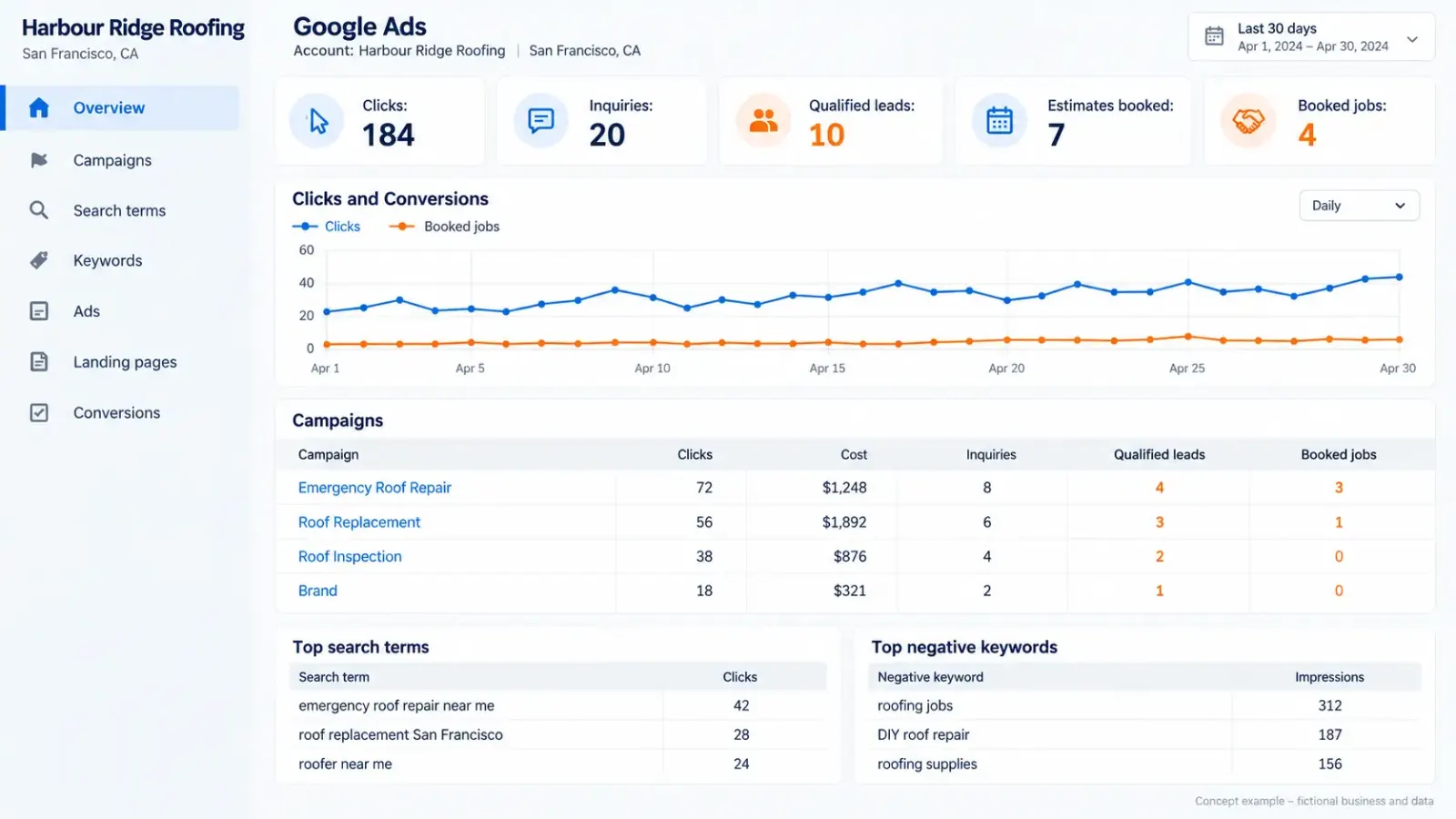
Watch the actual search terms that trigger your ads. Broad match can help you reach relevant searches, but it needs regular search term reviews and negative keywords. Without these controls, your ads may reach people who don’t need your services. This includes job seekers, DIY researchers, and suppliers.
When that happens, negative keywords can exclude unwanted search terms based on the negative match type used. This can reduce irrelevant traffic and help your ads reach more people searching for your roofing services.
Organize campaigns around the roofing services you want to prioritize. Send people searching for emergency roof repair to a page about that service instead of your homepage.
Track each inquiry beyond the initial conversion. Record the campaign and search term where possible. Then, update the lead once it becomes qualified, books an estimate, or turns into a job. If you need help setting this up, Roofer Marketing can manage the ads, landing pages, and lead tracking.
This gives you a better way to judge roofing marketing. A campaign with 20 inquiries isn’t necessarily better than one with 10. Don't judge campaigns by lead volume alone. Compare how many inquiries become qualified leads, booked estimates, and profitable jobs.
5. Turn completed jobs into proof
Every completed roofing job is content. Document it before the crew leaves. Take photos while the roof is still fresh.
With the customer's permission, collect before, during, and after photos. Take note of the roofing material you used, the problem your team found, the work completed, and the general service area.
Use this material on your website, Google Business Profile, and social media. You can also add photos and videos to your Business Profile. This lets homeowners see your roofing work. These photos also help potential customers see what services you usually handle.
Protect customer privacy when publishing this material. Don't share names, addresses, or other identifying information without appropriate permission.
6. Make referrals repeatable
A referral gives a new customer a reason to trust your company before contacting you. Ask customers for referrals after you finish each job. Keep a record of any referrals you receive. You need a process if you want referrals to become a dependable source of leads.
Ask satisfied customers to recommend your company and give them an easy way to share your phone number or website.
Talk to local businesses that work with property owners. Property managers may need roofers for repairs at rental properties. General contractors may hire your company to complete the roofing part of a larger project.
Real estate agents may refer buyers or sellers who find roof damage during an inspection. Gutter installers may find roof damage while they work. Solar crews and restoration firms may also meet people who need a roofer. They can refer work that falls outside their services.
A referral program can make the process more consistent. If you offer an incentive, explain the terms before anyone participates. Also, check any state laws, licensing rules, insurance requirements, or partner agreements that apply.

7. Use social media to show your roofing work
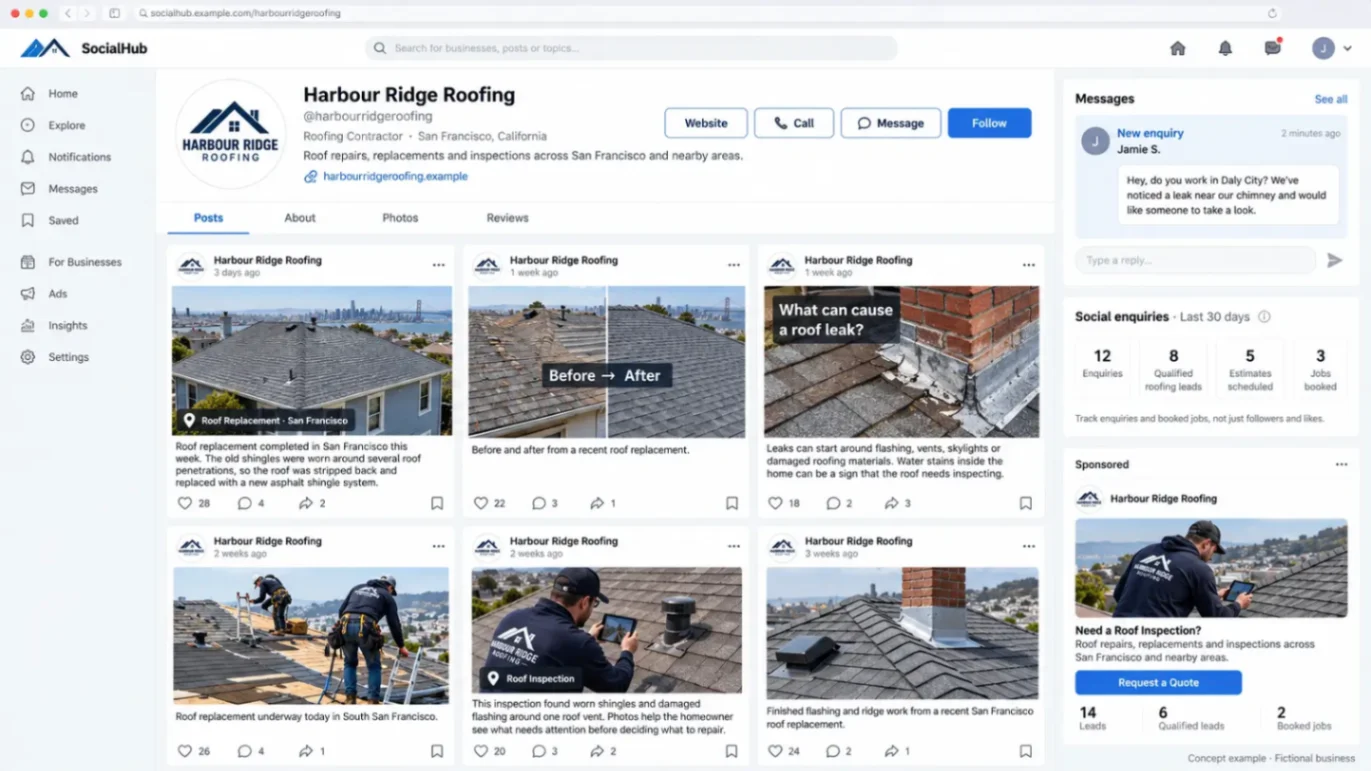
Social media works when it shows homeowners real evidence of your work. Posting every day means nothing if none of it shows what you actually do.
You can also share tips about common roofing problems and explain your services. Keep each post focused on one topic so homeowners without roofing experience can understand it.
This content can help when someone finds you elsewhere first. A homeowner may find your company through Google or a referral and check your social profiles before calling.
Don't judge social media by followers and likes alone. If the goal is to generate more leads, record how many inquiries come from it and whether those inquiries turn into worthwhile jobs.
Paid social advertising needs the same treatment. Cheap leads can become expensive once staff time and low booking rates are considered.
8. Improve lead handling before spending more
Generating more leads won't fix a weak follow-up process. Before spending more on marketing, check that every call and website inquiry gets a response.
Assign responsibility for new leads. Set a process for missed calls and make sure website forms reach someone who can respond.
Record enough information to understand what happened to each inquiry:
- Marketing source
- Roofing service requested
- Property location
- Qualified or unqualified lead
- Estimate booked
- Estimate outcome
- Job value when booked
These records show problems that traffic and click reports won't. One campaign may generate plenty of leads but few suitable estimates. Another may generate fewer inquiries that become roofing jobs.
Better follow-up can help turn more existing leads into estimates and booked jobs. You may not need to increase your ad spend.
Use that information when deciding where the next part of your marketing budget goes. If you need help connecting these campaigns, roofing marketing services can cover SEO, Google Ads, landing pages, websites, and lead tracking.

9. Follow up with leads and past customers by email
Some roofing inquiries aren't ready to book when they first contact you. The homeowner is collecting estimates, waiting on an insurance claim, or planning a replacement for later in the year.
Set up a follow-up process for these leads. Note why the job hasn’t moved forward. Set a date to follow up so the inquiry doesn’t get lost in an inbox.
Email can help you stay in touch with past customers. Send past customers useful information. This may include inspection reminders, maintenance tips, or storm preparation advice. Only email people if you have permission or another lawful reason to contact them. State your business name and include a working unsubscribe option.
10. Measure booked roofing jobs, not marketing activity
Tracking booked jobs helps you decide how to promote a roofing business based on sales instead of clicks. Track each lead through the sales process. For paid search, that can include both calls and forms. Phone call conversion tracking can show which campaigns led to calls. It doesn’t show whether every caller became a qualified lead or customer. Record what happened after each call in your CRM. If possible, import this data into Google Ads. You can then compare campaigns by qualified leads and booked jobs.
Website traffic, SEO rankings, ad clicks, impressions, and social engagement can tell you what's happening within a marketing channel. They don't tell you whether that channel generates profitable roofing work.
Also record why leads don't qualify. Common patterns can expose wasted spending. You may find that ads attract calls from outside your service area or that a page generates enquiries for roofing work you don't offer.
Review this information by campaign. It gives you a better basis for deciding where to spend more, where to make changes, and what to stop. If your campaigns are still not doing well, contact Roofer Marketing to review before you increase your budget.
11. Test one roofing marketing idea at a time
Once the basics are working, test one meaningful change at a time so you can assess its effect on lead quality.
You could launch a campaign for one roofing service, update one service page, or try a new follow-up schedule. Record the starting figures, the change made, and the results.
Use the same measures for each test. Look at qualified roofing leads, estimates, booked jobs, revenue, and acquisition costs where you can track them.
Give each test enough time to collect useful information. Then keep, change, or stop it based on the jobs it produces.
For more ideas, the roofing marketing blog covers ways to improve your marketing and business growth, including our guide on roofing advertising ideas.
Plan your roofing marketing around seasonal demand
Review your calls, estimates, and booked jobs by month and service. This will show when demand tends to rise, which services people request, and when enquiries slow down. Compare the same months across different years so normal seasonal changes don’t look like sudden campaign problems.
Prepare before busy periods
If roofing demand in your area rises during storm, hail, hurricane, or rainy seasons, prepare your marketing in advance. Update your emergency repair page, Google Business Profile hours, service areas, and contact details. Check that someone can answer calls and follow up on missed enquiries.
Review your Google Ads budgets and targeting against the number of jobs your team can handle. Send each ad to the page that matches the service rather than sending storm-related searches to the homepage.
Use slower months for planned work
Follow up on open estimates and leads that weren’t ready to book. Promote inspections, maintenance, and planned roof replacements when demand for emergency work drops. Only include services your company provides.
Use slow periods to update service pages and add recent project photos. You can also request reviews and check that each lead gets tracked. These jobs prepare your marketing for the next rise in demand.
Judge results within the right season
Compare busy periods with previous busy periods and slow months with previous slow months. Track qualified leads, booked jobs, and job value for each service. This gives you a fairer view than comparing a storm month with a quiet month.

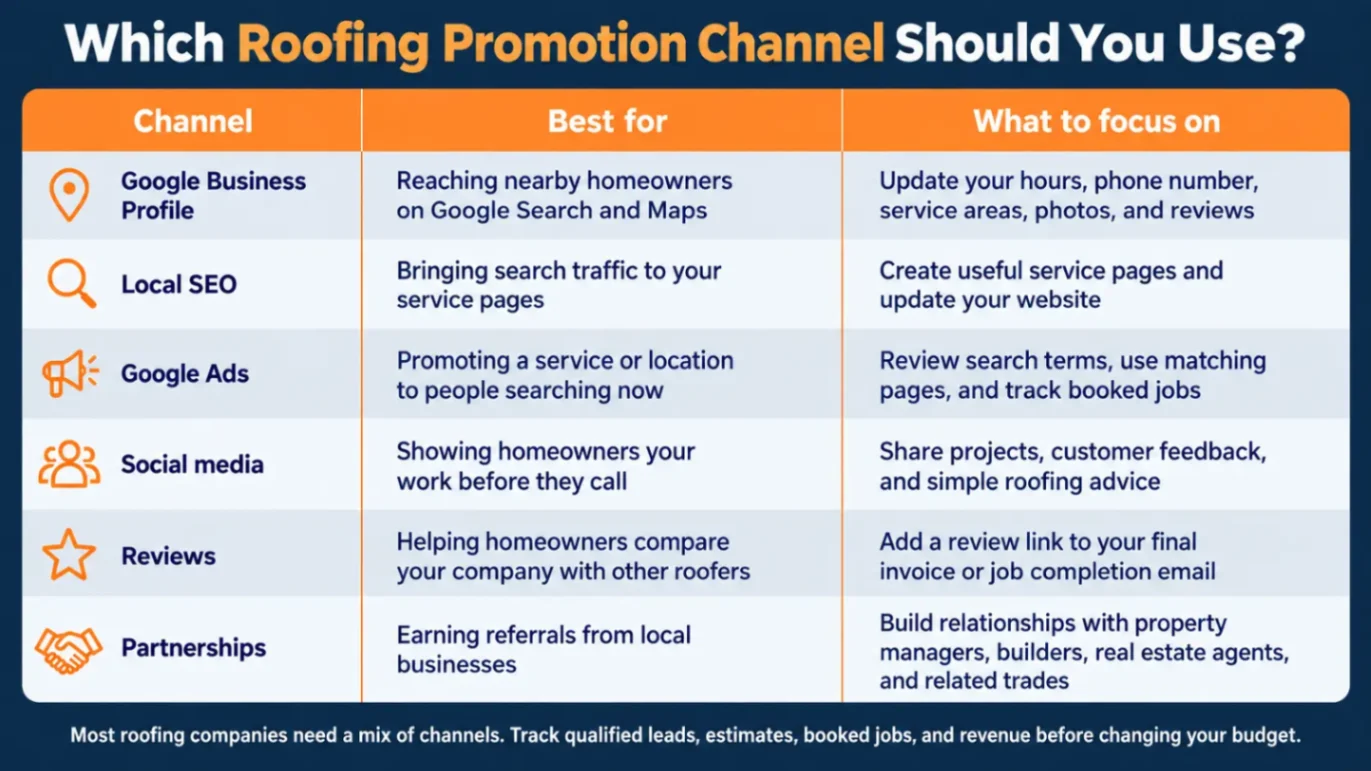
Which roofing promotion channel should you use?
Google Business Profile
Your Google Business Profile helps nearby homeowners find your company through Google Search and Maps. Keep your hours, phone number, service areas, photos, and reviews up to date.
Local SEO
Local SEO helps your website appear for roofing searches in the areas you serve. It needs useful service pages and regular website work. Results take longer than Google Ads, but the pages can keep bringing in search traffic without paying for every click.
Google Ads
Google Ads reaches people who are already searching for roofing services. It suits companies that want to promote a certain service or location sooner. Watch the search terms, send each ad to a matching page, and track which leads become booked jobs.
Social media
Social media gives homeowners another place to check your work. Share completed projects, customer feedback, and simple roofing advice. Measure enquiries and booked jobs instead of relying on likes or follower numbers.
Reviews
Reviews support your Google Business Profile and help people compare your company with other roofers. Add a direct review link to your final invoice or job completion email.
Partnerships
Partnerships work differently from search and social media. Property managers, builders, real estate agents, and related trades can refer people who need roofing work. The number of referrals will depend on how often each partner meets suitable customers.
You’ll often need a mix of channels. Google Ads can reach current search demand while local SEO grows. Reviews and social media give people more information before they call. Track qualified leads, estimates, booked jobs, and revenue to see which channels deserve more of your budget.
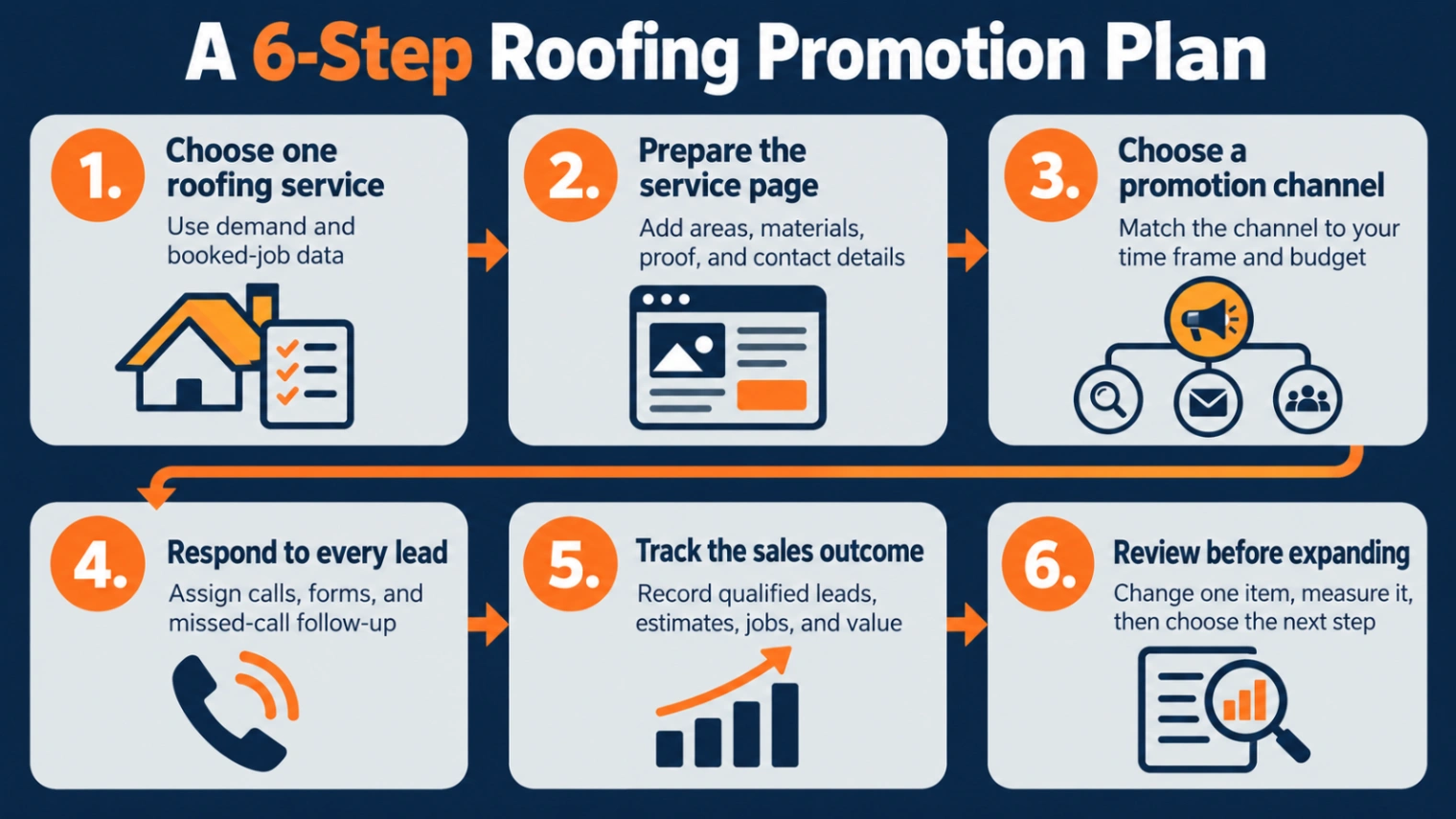
Follow this roofing promotion plan
Step 1: Choose one roofing service
Start with a service that has enough demand and suits the work your company wants. Review past calls, estimates, and booked jobs before choosing it.
Step 2: Prepare the service page
Explain the work, areas covered, roofing materials, and how to request an estimate. Check that calls and forms reach someone who can respond.
Step 3: Choose a promotion channel
Base this choice on your time frame. Google Ads reaches people searching now, while local SEO builds search visibility over time. Your Google Business Profile supports local searches. Reviews and project photos help homeowners assess your company.
Step 4: Respond to every lead
Assign someone to answer calls and website enquiries. Set a process for missed calls and decide when to follow up. Record each contact attempt so leads don’t get lost between team members.
Step 5: Track the sales outcome
Record where each lead came from. Track whether the person qualified, booked an estimate, and became a customer. Include the job value when you have it.
Step 6: Review before expanding
Check the results before adding another channel. Change one part at a time so you can see what affects lead quality and booked work. Keep the budget focused on campaigns that produce suitable jobs.
Decide what to promote first
Look at which services your customers request most. Start by promoting those services before spending money on work that receives less demand.
If low-cost leads rarely book, review where they come from and what your ads offer. Check how your team responds before changing the budget. If costly leads often become booked jobs, compare the cost of each lead with the value of the work. Use this figure before you spend more.
Complete your Google Business Profile. Fix your service pages. Collect reviews and make sure every inquiry has a recorded source and outcome.
Google Ads can show your business for high-intent searches sooner than SEO. Many factors can affect the number and quality of your leads. These include demand, budget, targeting, competition, ads, and landing pages.
The right mix differs between roofing companies. Judge each campaign by the leads it produces. Track lead cost, lead quality, customer acquisition cost, and conversion rate. Also track job value and gross profit. Compare these figures with your team’s capacity to decide which channels can support growth.
If you want a clear marketing plan tailored to your local area and services, get in touch with Roofer Marketing today to discuss a strategy that delivers qualified jobs.
